Understanding the Landscape of Digital Signature Security in Vietnam
As Vietnam accelerates its national digital transformation agenda, the adoption of digital signatures (chữ ký số) has become ubiquitous in tax declarations, social insurance filing, and e-invoicing. However, this rapid digitization has introduced significant security challenges. The primary rủi ro chữ ký số often stems not from the cryptographic technology itself, but from the human and operational errors surrounding token management and certificate storage.
Common Risks Associated with Digital Signatures
Businesses in Vietnam frequently face security breaches due to the unauthorized use of USB tokens. When an organization grants full access to a token to an external accounting firm or a non-authorized employee, the risk of identity theft increases exponentially. Attackers often target the 'signing' phase, where they manipulate the content of an electronic document before the authorized user applies their signature. Another critical risk involves the use of expired or revoked certificates, which may be exploited by malicious actors to provide a false sense of legitimacy to fraudulent contracts or invoices.
The Role of Human Error and Operational Security
Statistics from local cybersecurity departments suggest that over 70% of security incidents related to digital signatures are linked to poor internal controls. Employees often leave USB tokens plugged into public-facing computers or share PIN codes to expedite administrative tasks. This negligence undermines the non-repudiation feature of digital signatures. For a secure workflow, businesses should kiểm tra chữ ký số regularly to ensure that certificates remain valid and that no unauthorized activity has been logged under the company's credential.
Prevention Tactics for Vietnamese Enterprises
To mitigate the risks of fraud, companies should implement a multi-layered security strategy. First, enforce a strict policy where the digital signature token is stored in a secure, physically restricted environment. Second, utilize hardware security modules (HSMs) for large-scale operations to centralize control. Third, conduct periodic audits of all signed documents to identify anomalies. It is essential to choose reputable Certificate Authorities (CAs) that are licensed by the National Electronic Authentication Centre (NEAC) to ensure compliance with Vietnam's Law on Electronic Transactions.
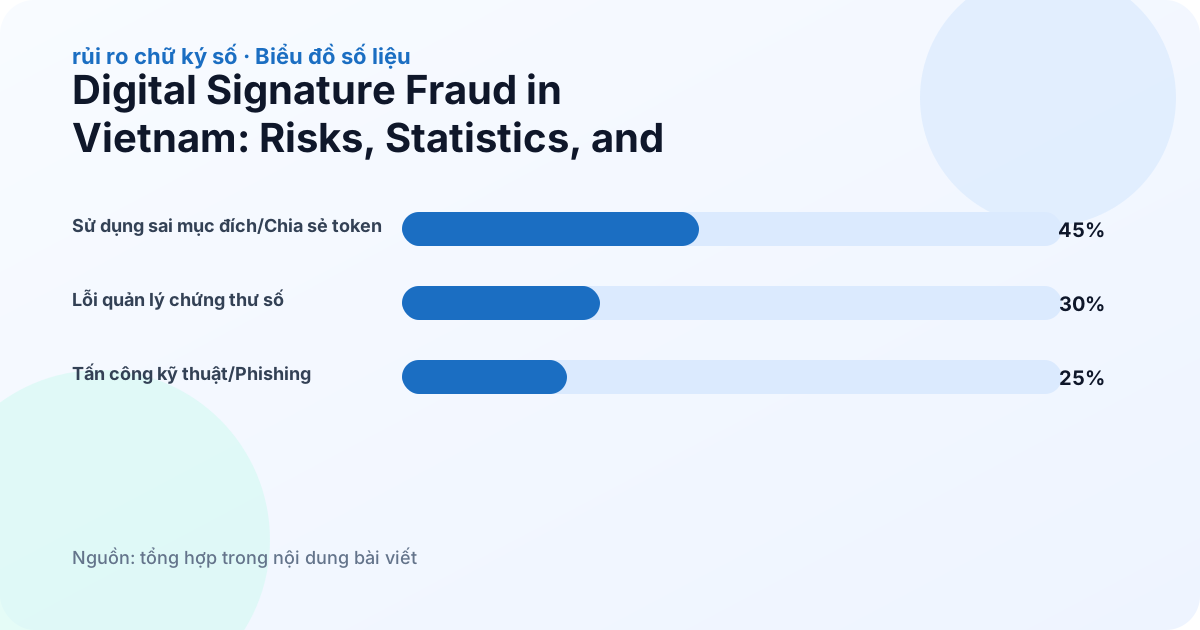
Phân bổ rủi ro chữ ký số phổ biến
Dựa trên các báo cáo khảo sát về an toàn thông tin doanh nghiệp tại Việt Nam, đây là các nhóm rủi ro chính mà các tổ chức cần chú trọng quản lý.
- Chia sẻ token và mật khẩu không kiểm soát
- Sử dụng chứng thư hết hạn hoặc bị thu hồi
- Lừa đảo chiếm đoạt thông tin xác thực
Legal Disclaimer
The information provided in this article is for educational purposes only. Digital signature laws and regulations in Vietnam are subject to change. Readers should consult with qualified legal counsel or certified IT security professionals for binding advice regarding their specific business operations and legal liabilities.
Nguồn tham khảo
Nội dung trên website mang tính tham khảo kỹ thuật và không thay thế tư vấn pháp lý chính thức.
Kiểm tra chữ ký số PDF/XML ngay